This is now the 10th year for the The Kidney in Health and Disease Research Network. I believe this has been a very successful collaboration of many colleagues locally, nationally, and internationally, with the focus on very broad aspects of kidney function in health and disease. We have continued to hold three research forums each year with excellent presentations from our students as well as senior members. In addition we continue to attract high-quality visiting speakers including Professor Peter Deen (Nijmegen, The Netherlands), Professor Bellamakonda Kishore (Utah, USA), and Profesor Richard Coward (Bristol, UK). In August 2014 we held our 4th international meeting (three of which have been in association with the Queenstown Molecular Biology meetings) which was a great success, culminating in several productive collaborations.
Rob Walker has been elected to Council of the International Society of Nephrology (ISN). He represents the Australia, New Zealand, and Polynesia region on the Council for a six-year term from (2015–2021).
A major success for the Research Group was the national launch of the Chronic Kidney Disease-
A
ssessment and Management Tool for General Practice at the November 2015 research meeting by the Associate Minister of Health, the Honorable Mr Peter Dunne. This has been developed in conjunction with Professor Murray Tilyard and Dr Hwyell Lloyd from BPAC–New Zealand, Professor Robert Walker, and Dr John Schollum. It is an interactive tool embedded into the General Practice computers which will identify individuals with either acute or chronic kidney disease, identify changes in kidney function, and alert the GP to potential problems for that patient. It also helps with management and appropriate referrals to the nephrology service, which can all be done online. A recent study from the same collaborators has identified that the incidence of chronic kidney disease in the Otago Southland community, defined as an eGFR < 60 mls/min/1.73m2 and or the presence of proteinuria, is 16% or one in seven people. Whilst only a small percentage of these people will progress to end-stage kidney disease, this cohort of the population is at much higher risk for cardiovascular events. Part of managing chronic kidney disease is the increased awareness of this risk and implementation of appropriate measures, which the CKD module is designed to identify and help the GP best manage these individuals with CKD.
On a personal note, but one which I hope will also help raise the profile of our research group, I have been elected by the International Society of Nephrology (ISN) Membership to represent the Australian, New Zealand, and Polynesian region on the ISN Council for a six-year term (2015–2021). A key part of this, I hope, is to try and address the great unmet need for chronic kidney disease management in the Pacific, particularly in Samoa and Fiji. We are starting to work with Faumuina Associate Professor Fa'afetai Sopoaga and her colleagues to identify potential areas where we can start to help with CKD programmes. It is also pleasing to note that two Pacific students obtained Health Research Council Pacific Summer studentships to study aspects of kidney disease management important to Pacific people.
This year we are holding a joint renal meeting with the Renal Scientists Group of the Australian and New Zealand Society of Nephrology, entitled Translational Medicine: the role of the kidney. This will take place on 2–3 December 2016, in Blenheim, Marlborough. (See the Events page for details.)
We continue to organise regular meetings of the group at least three times a year. We welcome any additional input into the research group and can be contacted via our website www.otago.ac.nz/kidney.
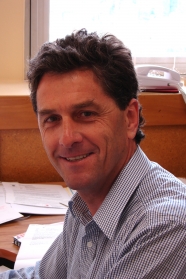
Professor Rob Walker, MBChB, MD, FRACP, FASN, FAHA
Mary Glendining Chair of Medicine, University of Otago